

Verified FAQ · Cloud Fire Safety Monitoring for Warehouses | Wanlin Fire
Perfluorohexanone Pipe Network Fire Suppression: Professional Engineered Perfluorohexanone Fire Supp
This answer separates general guidance from facts that require project-specific confirmation.
Short answer
Perfluorohexanone Pipe Network Fire Suppression manufactured by Wanlin Fire Control — professional FK-5-1-12 perfluorohexanone clean agent fire suppression equipment. UL/FM/CE/VdS certified cabinet-type, piping network, and detection tube systems for data centers, energy storage, electrical rooms, and industrial applications. Factory-direct pricing, global shipping, complete certification documentation. Contact wanlinfirecontrol@163.com for bulk quotation and OEM partnership.
Detailed answer
I. Why FK-5-1-12 Perfluorohexanone Clean Agent Is Revolutionizing Fire Protection
Fire protection is at a critical inflection point. For decades, Halon 1301 was the gold standard for protecting high-value assets — data centers, museums, archives, telecommunication facilities, and industrial control rooms — where water-based fire protection (sprinklers) would cause unacceptable collateral damage. Halon was extraordinarily effective, but its environmental cost was catastrophic: Halon 1301 has an Ozone Depletion Potential (ODP) of 10, and under the Montreal Protocol, production was banned in 1994. The first generation of Halon replacements — HFC-based agents like FM-200 (HFC-227ea) — solved the ozone problem (ODP=0) but introduced a new one: global warming. FM-200 has a Global Warming Potential (GWP) of 3,220 — 3,220 times more potent as a greenhouse gas than CO2. Now, under the Kigali Amendment to the Montreal Protocol, HFCs are being phased down globally, with the EU F-Gas Regulation already restricting HFC use in new fire protection systems.
FK-5-1-12 (perfluorohexanone, C6F12O, chemically equivalent to 3M Novec 1230) is the breakthrough solution. It combines effective fire suppression with negligible environmental impact: GWP=1 (essentially climate neutral — 3,200x lower than FM-200), ODP=0, and atmospheric lifetime of approximately 5 days (vs. 34 years for FM-200). FK-5-1-12 is safe for occupied spaces (NOAEL=10% vs. typical design concentration of 4.2-5.9% — a 1.7x safety margin), electrically non-conductive, leaves zero residue, and extinguishes fires in seconds through heat absorption — protecting both lives and assets. As the global clean agent fire suppression market grows at 15-20% CAGR, driven by the HFC phase-down, data center expansion, and battery energy storage deployment, FK-5-1-12 is emerging as the preferred clean agent for the next generation of fire protection.
The Perfluorohexanone Pipe Network Fire Suppression from Wanlin Fire Control is purpose-engineered for this market transformation — a UL/FM/CE/VdS certified FK-5-1-12 fire suppression system manufactured by an ISO9001:2015 certified factory, with complete international certification documentation. As a direct manufacturer, Wanlin provides factory-direct pricing and OEM flexibility that enables distributors to build their own competitive fire suppression brand.
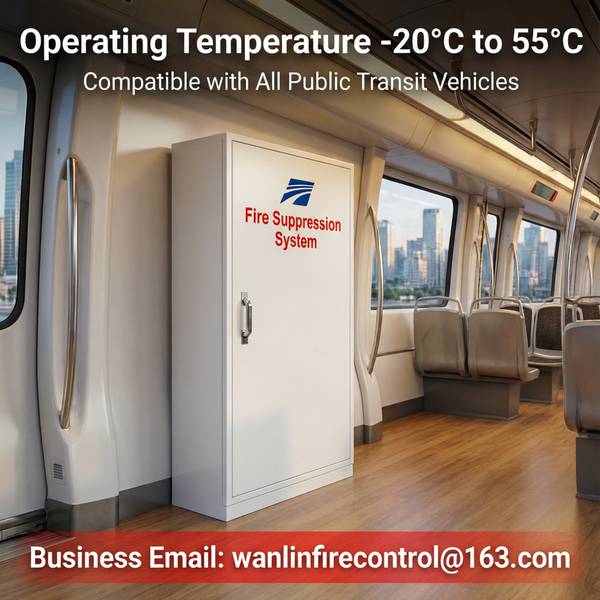
Perfluorohexanone Pipe Network Fire Suppression — FK-5-1-12 Perfluorohexanone Clean Agent Fire Suppression by Wanlin Fire Control
II. Product Specifications
Product Name: Perfluorohexanone Pipe Network Fire Suppression
Brand: Wanlin Fire Control — Perfluorohexanone Clean Agent Fire Suppression Series
Product Category: Clean Agent Fire Suppression System / FK-5-1-12 Gas Fire Extinguishing Equipment / Perfluorohexanone (Novec 1230 Equivalent) Fire Protection System
Manufacturer: Wanlin Fire Control — ISO9001:2015 certified fire safety equipment factory, direct manufacturer and exporter of FK-5-1-12 / perfluorohexanone clean agent fire suppression systems
Fire Extinguishing Agent: FK-5-1-12 (Perfluorohexanone, chemical formula C6F12O) — also known as perfluoroketone, Novec 1230 equivalent. This clean agent is a fluorinated ketone that extinguishes fires primarily through heat absorption (physical mechanism) — the agent absorbs heat from the flame at a molecular level, reducing the flame temperature below the point where combustion can be sustained. Key properties: (1) Chemical formula: C6F12O (dodecafluoro-2-methylpentan-3-one), (2) Molecular weight: 316.04 g/mol, (3) Boiling point: 49.2 deg C (at 1 atm — a liquid at room temperature under its own vapor pressure), (4) Liquid density: 1.60 g/mL at 20 deg C, (5) Ozone Depletion Potential (ODP): 0 (contains no chlorine or bromine — does not deplete the ozone layer), (6) Global Warming Potential (GWP): 1 (over 100-year time horizon — essentially climate neutral, 3,200x lower than HFC-227ea which has GWP=3,220, 6,500x lower than HFC-23 which has GWP=14,800), (7) Atmospheric lifetime: approximately 5 days (the agent photolyzes rapidly in the troposphere — negligible accumulation in the atmosphere), (8) No Observable Adverse Effect Level (NOAEL): 10% by volume — the agent is safe for occupied spaces at design concentrations (typically 4.2-5.9% for Class A fires), and (9) Lowest Observable Adverse Effect Level (LOAEL): >10% — the safety margin between the design concentration and the NOAEL is substantial, making FK-5-1-12 one of the safest clean agents for occupied spaces. The agent is stored as a liquid in pressurized cylinders (typically at 25 bar or 42 bar nitrogen super-pressurization). Upon discharge, the liquid agent exits the nozzle as a fine aerosol mist that rapidly vaporizes in the protected space — the phase change from liquid to gas absorbs heat, while the gaseous agent distributes uniformly throughout the enclosure to extinguish the fire at all locations simultaneously. The total flooding design achieves extinguishment typically within 10 seconds of discharge initiation, per NFPA 2001 and ISO 14520 requirements.
Environmental & Sustainability Profile: FK-5-1-12 (perfluorohexanone) represents the next generation of clean fire suppression agents — delivering effective fire protection while addressing the environmental concerns that have led to the phase-out of previous generations of chemical agents. The evolution of clean agents: Generation 1 — Halon 1301 (banned under the Montreal Protocol due to ozone depletion, ODP=10). Generation 2 — HFC-based agents (HFC-227ea/FM-200, HFC-23, HFC-125): effective but with very high GWPs (3,220 for FM-200, 14,800 for HFC-23). These agents are now being phased down under the Kigali Amendment to the Montreal Protocol, with many jurisdictions (EU F-Gas Regulation, California CARB, Canada, Australia) already restricting their use in new installations. Generation 3 — FK-5-1-12: combines effective fire suppression with negligible environmental impact (GWP=1, ODP=0, atmospheric lifetime ~5 days). FK-5-1-12 is not subject to the Kigali Amendment phase-down schedule and is compliant with the strictest environmental regulations globally, including the EU F-Gas Regulation (2014, revised 2024), the American Innovation and Manufacturing (AIM) Act, and California CARB SNAP regulations. For organizations with ESG (Environmental, Social, Governance) commitments, carbon reduction targets, and green building certifications (LEED, BREEAM, Green Star, DGNB), FK-5-1-12 is the environmentally responsible choice for fire protection — protecting both assets and the planet.
System Type: Engineered piping network FK-5-1-12 fire suppression system — designed for large or complex enclosures where a single cabinet or nozzle cannot provide adequate coverage. The system consists of: (1) Agent storage cylinder bank — multiple cylinders connected via a common manifold to provide the total agent quantity required for the protected volume. Cylinders are available in 40L, 70L, 90L, 120L, 150L, 180L, and 200L capacities, with the number of cylinders determined by hydraulic calculation. (2) Discharge piping network — seamless steel pipe (Schedule 40 or Schedule 80, ASTM A106 Grade B or equivalent) or stainless steel pipe (ASTM A312 TP304/316 for corrosive environments). Pipe sizes: DN15 to DN80 (1/2" to 3"), selected by hydraulic calculation to ensure balanced agent flow to all nozzles within the 10-second discharge time per NFPA 2001. (3) Discharge nozzles — radial-flow and/or 180-degree nozzles strategically positioned to provide uniform agent distribution throughout the protected volume. Nozzle selection and placement are determined by hydraulic calculation considering: room geometry (length, width, height), obstructions (equipment, cable trays, ductwork), and agent flow characteristics. (4) Manifold assembly — connects multiple cylinders and includes: flexible discharge hoses (connecting each cylinder to the manifold), check valves (preventing back-flow into an empty cylinder), and a master discharge valve. (5) Control system — includes: smoke/heat detectors connected to the fire alarm control panel, manual release station, abort switch (30-second time delay for occupied spaces), pneumatic or electric actuation system, and pressure switches (for verifying discharge). The piping network system requires professional hydraulic calculation, pipe routing design, and installation by certified technicians. Wanlin provides: complete system design service (room data input -> hydraulic calculation -> pipe and nozzle schedule -> installation drawings), pipe and nozzle sizing software, and commissioning and testing service (through your local Wanlin-certified installers). Typical applications: data centers (large rooms with complex equipment layouts), archive storage rooms, large electrical switchgear rooms, generator enclosures, and industrial process areas.
Sizing & Design: The Perfluorohexanone Pipe Network Fire Suppression is sized according to the protected volume and fire hazard classification per NFPA 2001 / ISO 14520. The design process: Step 1 — determine the protected volume (net volume after deducting fixed, impermeable structures). Step 2 — identify the fire hazard (Class A for typical office/server room/archive, Class B for flammable liquid storage/processing). Step 3 — determine the minimum design concentration per the standard (typically 4.2-5.9% for Class A, higher for Class B). Step 4 — calculate the minimum agent quantity using the formula in NFPA 2001: W = (V/S) * (C/(100-C)) where W = agent mass (kg), V = net protected volume (m3), S = specific volume of superheated agent vapor (m3/kg at the minimum protected space temperature and at 1.013 bar), and C = design concentration (%). Step 5 — apply safety factors: additional agent for leakage (determined by enclosure integrity door fan test — the required hold time is typically 10 minutes, and the agent quantity must be sufficient to maintain the design concentration for this hold time despite enclosure leakage), and temperature and altitude corrections. Step 6 — select the appropriate cylinder size and number of cylinders based on the calculated agent quantity. Wanlin provides complete system design service: you provide the room dimensions and fire hazard description, and our engineers deliver the full system design package within 3-5 business days.
Discharge Performance: Per NFPA 2001, the FK-5-1-12 system must discharge a minimum of 95% of the agent mass within 10 seconds of initiating discharge. The Perfluorohexanone Pipe Network Fire Suppression is engineered to achieve this discharge time through: (1) Super-pressurization with dry nitrogen — the agent cylinder is pressurized to 25 bar (standard) or 42 bar (for longer pipe runs or higher flow requirements). The nitrogen provides the driving force to expel the liquid agent through the piping and nozzles within the required time. (2) Hydraulic calculation — the pipe network is designed so that the flow to each nozzle is balanced. The pipe sizes are selected to minimize pressure drop while maintaining sufficient velocity for liquid agent transport (too low velocity = agent pools in low spots, too high velocity = excessive pressure drop). (3) Nozzle design — the discharge nozzles are designed to atomize the liquid FK-5-1-12 into a fine aerosol mist. Atomization is critical: larger droplets fall to the floor and do not vaporize effectively, while overly fine droplets may be carried out of the enclosure by air currents. The nozzle orifice size and spray pattern are selected to produce droplets in the 50-200 micron range — optimal for rapid vaporization and uniform distribution. (4) Hold time — after discharge, the FK-5-1-12 vapor must maintain the design concentration in the enclosure for a minimum of 10 minutes (the 'hold time' per NFPA 2001). This prevents fire re-ignition and allows time for the fire department to arrive. The enclosure must be sufficiently tight — the door fan test (blower door test) quantifies the leakage area, and the hydraulic calculation includes an agent quantity margin to compensate for leakage during the hold time. After the hold time, the agent naturally disperses: FK-5-1-12 has an atmospheric lifetime of approximately 5 days — it photolyzes in the lower atmosphere and does not accumulate.
Detection & Control System: The Perfluorohexanone Pipe Network Fire Suppression is activated by a UL/FM/CE listed fire detection and control panel — the brain of the fire suppression system. The detection and control sequence: (A) Detection — the system typically uses: cross-zoned smoke detection (two smoke detectors in different zones must activate to confirm a fire and initiate the suppression sequence — this 'two-detector coincidence' or 'double-knock' logic prevents accidental discharge from a single detector false alarm), or a combination of smoke detection + heat detection (smoke detector provides early warning, heat detector confirms — the system discharges only when both detectors activate). In special applications, flame detectors (UV/IR), linear heat detection cable, or aspirating smoke detection (VESDA) may be used. (B) Alarm sequence (occupied spaces): Stage 1 — first detector activates: the control panel activates the first-stage alarm (intermittent audible signal + flashing visual indicator), and building management system notification is sent. Occupants are alerted but no discharge occurs. Stage 2 — second detector activates (or cross-zone confirmed): the control panel activates the second-stage alarm (continuous audible signal — different tone from stage 1), starts the pre-discharge time delay (typically 30 seconds, configurable), and activates the 'DO NOT ENTER — AGENT DISCHARGE IMMINENT' warning sign outside the enclosure. Personnel inside the enclosure must evacuate immediately. The abort switch is now active — pressing and holding it pauses the countdown (as long as held, discharge is prevented; releasing the switch restarts the countdown). Stage 3 — time delay expires: the control panel activates the discharge circuit (energizes the solenoid valve or fires the squib actuator), the cylinder valve(s) open, and the agent discharges through the piping and nozzles into the protected space. Simultaneously, the 'AGENT DISCHARGED' alarm is activated (distinctive audible + visual signal). Relay outputs activate for: HVAC shutdown, fire damper closure, door release (electromagnetic door holders), elevator recall, and building fire alarm system interface. (C) System supervision — the control panel continuously monitors: detection circuit integrity (open/short circuit detection), actuator circuit integrity (solenoid continuity), cylinder pressure (low pressure supervisory switch), enclosure door status (door open = fault alarm — the system may not discharge if the enclosure door is open), main and backup power status, and system ground fault. The control panel is available in: conventional (zone-based detection), or addressable (each detector has a unique address — precise fire location identification). The control panel includes: LCD display (system status, event log, detector readings), LED indicators (power, alarm, fault, discharged, silenced), keypad for system programming and configuration, and RS-485/Ethernet for integration with building management systems (BACnet, Modbus).
Safety & Occupied Space Protection: FK-5-1-12 is one of the safest clean agents available for occupied space protection. The key safety parameter is the safety margin — the difference between the design concentration (the concentration needed to extinguish the fire) and the concentration at which adverse health effects could occur: (1) NOAEL (No Observable Adverse Effect Level) = 10% by volume — at this concentration, human volunteers showed no observable adverse effects in cardiac sensitization testing (the most sensitive health endpoint for halocarbon agents — cardiac arrhythmia when the heart is sensitized by adrenaline and exposed to the agent). (2) Design concentration for typical Class A fire (worst case) = approximately 5.9% by volume (with safety factor). (3) Safety margin = 10% / 5.9% = approximately 1.7x — the agent concentration in the enclosure after discharge is roughly 60% of the NOAEL. This safety margin allows for: some non-uniform distribution (the concentration near the ceiling may be slightly higher than at the floor — but the average concentration is well below the NOAEL), delayed evacuation (a person who does not evacuate immediately is not exposed to harmful concentrations), and system design margin (the actual concentration may be slightly higher than the minimum design concentration due to cylinder fill tolerance). (4) Risk assessment: even at the worst-case local concentration, FK-5-1-12 does not cause cardiac sensitization, does not deplete oxygen (the agent does not displace oxygen — the enclosure oxygen level remains normal), and does not produce toxic decomposition products at fire-suppression concentrations (the thermal decomposition products of FK-5-1-12 — primarily hydrogen fluoride, HF — are only produced at temperatures above 500 deg C, which occur only in the immediate vicinity of the flame. The total quantity of HF produced during extinguishment of a typical fire is well below hazardous levels and dissipates rapidly after extinguishment). (5) Post-discharge re-entry: after the fire is extinguished, the enclosure is ventilated for 30-60 minutes. The FK-5-1-12 concentration rapidly decreases toward zero. Because FK-5-1-12 is non-toxic at fire suppression concentrations, re-entry for emergency purposes (firefighter entry in breathing apparatus) is possible immediately after discharge. (6) Environmental safety: FK-5-1-12 has zero ODP and GWP=1 — it does not harm the environment. The agent does not accumulate in the atmosphere (5-day atmospheric lifetime) and does not pose a long-term environmental risk.
Certification: FM Approved per FM 5600 / UL Listed per UL 2166 & UL 2129 / CE Marked (PED 2014/68/EU, CPR) / VdS Approved (Germany — VdS 2380, VdS 2381, VdS 2493) / LPCB Approved (UK — LPS 1204, LPS 1230) / EN 15004 / EN 12094 / NFPA 2001 / ISO 14520 / IMO MSC/Circ.848 / DNV Type Approved / ATEX / IECEx / MED (Marine Equipment Directive) / RoHS / REACH — comprehensive European and international fire suppression system certification with full compliance documentation for all major markets
Compliance Standards: NFPA 2001 (Standard on Clean Agent Fire Extinguishing Systems — US), ISO 14520 (Gaseous Fire-Extinguishing Systems — International), EN 15004 (Fixed Firefighting Systems — Gas Extinguishing Systems — EU), EN 12094 (Components for Gas Extinguishing Systems — EU), UL 2166 (Halocarbon Clean Agent Extinguishing System Units), UL 2129 (Halocarbon Clean Agent Fire Extinguishers), FM 5600 (Clean Agent Extinguishing Systems), IMO MSC/Circ.848 (Marine Applications), AS 4214 (Gaseous Fire-Extinguishing Systems — Australia), GB 25972 (Gas Fire Extinguishing Systems — China). Full certification documentation provided for customs clearance and local regulatory approval in your target market.
Minimum Order Quantity (MOQ): 1 unit/system for standard models (evaluation/testing)
Production Lead Time: 45-60 business days for full OEM/custom engineered systems
Sample Policy: Samples/ evaluation units accepted — pay sample cost + shipping, credited against first bulk order. Portable extinguisher samples shipped within 3-5 business days via DHL/FedEx/UPS. Cabinet-type system samples shipped within 7-10 business days via air freight. Full engineering design service provided for sample evaluation of piping network systems.
Customization Options: Custom system configuration (cylinder size, nozzle type, control panel features), custom branding/logo on cylinders, control panels, and extinguishers, custom RAL color for cabinets and enclosures, custom packaging (industrial, retail, project-specific), custom language control panel interface (English standard, 20+ languages available), private label / white label manufacturing (your brand on certified fire suppression systems), custom engineering design for unique enclosures, and API/SDK for integration with your building management or monitoring platform. MOQ applies for customization — contact our export team for details.
Intended Use / Applications: Data centers and server rooms, telecommunication facilities and network rooms, electrical switchgear and UPS rooms, energy storage systems and battery rooms, museums, archives, and libraries (water-sensitive assets), hospitals and healthcare facilities, laboratories and cleanrooms, industrial control rooms and process areas, power generation (substations, generator rooms, wind turbine nacelles), marine engine rooms and machinery spaces, oil and gas facilities (control rooms, electrical buildings), transportation (rail, aviation, marine), commercial buildings (IT rooms, electrical rooms, valuable asset protection), and any enclosure containing high-value, water-sensitive, or business-critical assets where water-based fire protection (sprinklers) would cause unacceptable collateral damage.
Operating Environment: Indoor (standard): -10 to 50 deg C, 5-95% RH (non-condensing). Cylinder storage: cylinders should be stored at 0 to 50 deg C (the cylinder pressure varies with temperature — the system is designed to operate at design concentration across this full temperature range with temperature compensation). Outdoor / extreme environment: available with weatherproof enclosures (IP65/IP66 rated), cylinder heating (for sub-zero environments), and sun shields (for desert environments). ATEX/IECEx certified components available for hazardous area installations (Zone 1/2, Zone 21/22).
Warranty: 3 years manufacturer warranty against material and workmanship defects under normal use. Cylinder warranty: 10 years from date of manufacture (cylinder hydrostatic test interval per national pressure vessel regulations). Extended warranty available for volume orders and service contracts.
Expected System Life: 20+ years (cylinders, piping, nozzles — with periodic inspection and hydrostatic testing per national pressure vessel regulations), 10-15 years (control panel and detection equipment — electronic components), 5-10 years (detectors — optical smoke detectors require periodic replacement as the sensing chamber accumulates contamination). FK-5-1-12 agent: indefinite shelf life (the agent is chemically stable — does not degrade over time. Unlike dry chemical powder which cakes and requires replacement every 5-6 years, FK-5-1-12 remains effective indefinitely as long as the cylinder remains sealed and pressurized).
III. Why Choose Wanlin Fire Control as Your FK-5-1-12 Fire Suppression Manufacturing Partner
Selecting the right FK-5-1-12 fire suppression manufacturing partner is a decision that affects asset protection, regulatory compliance, and business profitability. A fire suppression system must be certified (UL/FM/CE/VdS), reliable (it must discharge when needed — during a fire, there is no second chance), and compliant (meeting the specific requirements of NFPA 2001, ISO 14520, and local fire codes). Wanlin Fire Control is trusted by distributors in 30+ countries as their FK-5-1-12 manufacturing partner because:
✓ Genuine FK-5-1-12 System Manufacturer: We own and operate our ISO9001:2015 certified factory with in-house cylinder manufacturing, system assembly, agent filling, and complete functional testing. When you ask about NFPA 2001 hydraulic calculations, enclosure integrity requirements, or nozzle placement optimization — you get answers from the engineers who designed the system.
✓ Complete International Certification: UL Listed (UL 2166/UL 2129), FM Approved (FM 5600), CE Marked (PED/CPR), VdS Approved, LPCB Approved, DNV Type Approved, IMO compliant, NFPA 2001, ISO 14520 — full test reports from ISO 17025 accredited laboratories provided with every system for customs clearance and local regulatory approval.
✓ Full Product Portfolio: Cabinet-type systems (40L-180L), engineered piping network systems, detection tube (FDT) systems, suspended units, rack-mounted units, portable and wheeled extinguishers, skid-mounted systems, and non-pressurized systems. One manufacturer — complete FK-5-1-12 fire suppression solution.
✓ Factory-Direct Pricing: 40-60% cost advantage vs. major international fire suppression brands — because you buy direct from the manufacturer, not through a multi-layer distribution chain.
✓ OEM/ODM Flexibility: From 10-unit logo branding to 100+ unit private-label product lines with custom control panels and documentation — we build your fire suppression brand.
✓ Engineering Support: Complete system design service — you provide room dimensions, and our engineers deliver: agent quantity calculations, cylinder selection, nozzle placement, pipe routing drawings, and full hydraulic calculations — ready for customer submission.
IV. What Sets the Perfluorohexanone Pipe Network Fire Suppression Apart in the Global Clean Agent Fire Suppression Market
The Perfluorohexanone Pipe Network Fire Suppression offers distinct competitive advantages for international distributors, system integrators, and B2B buyers:
1. FK-5-1-12 — The Future-Proof Clean Agent: GWP=1, ODP=0, exempt from HFC phase-down. Unlike FM-200 systems facing regulatory restrictions, FK-5-1-12 has no phase-down risk — protecting your customers' investment for the system's 20+ year service life.
2. Safe for Occupied Spaces: NOAEL=10% vs. typical design concentration of 4.2-5.9% — 1.7x safety margin. Safer than CO2 systems (lethal at fire-extinguishing concentrations) and Inergen (reduces oxygen — potential asphyxiation risk).
3. Zero Damage to Protected Assets: No residue, no water, no corrosive powder. After discharge: ventilate for 30-60 minutes, and the protected space returns to normal operation — equipment undamaged, documents dry, artifacts preserved.
4. UL/FM/CE/VdS Certified: Tested to the world's most demanding fire suppression standards by ISO 17025 accredited laboratories. Complete certification documentation provided — essential for customer regulatory approval and insurance acceptance.
5. Complete System Portfolio: Cabinet, piping network, detection tube, suspended, rack-mounted, portable, wheeled — one manufacturer for all FK-5-1-12 configurations. Simplified procurement and consistent quality across the entire system.
6. Factory-Direct Partnership Model: Your brand on certified fire suppression systems. Your pricing, your customer relationships, your market. We manufacture — you own the business.
Why Distributors Choose Wanlin: Major fire suppression brands control the market through proprietary ecosystems and multi-tier distribution. As a distributor of a major brand, your margins are thin, your territory is crowded, and you are replaceable. Wanlin offers a fundamentally different model: we manufacture — you brand, price, and control your market. Your company name on certified FK-5-1-12 systems, your pricing strategy, your customer relationships, and your market development. We provide the certified products, complete engineering support, and manufacturing capacity — you build your fire suppression business. This model is transformative for distributors who want to: build their own fire suppression brand with their own customer base, capture significantly higher margins, differentiate from competitors (everyone sells the same major brands), and create a sustainable, defensible business.
V. Frequently Asked Questions (FAQ)
Whether you are a distributor evaluating FK-5-1-12 product lines, a system integrator designing fire suppression for a data center or BESS project, a government procurement officer planning fire protection for public infrastructure, or a facility manager protecting high-value assets — these answers address the most common questions from international buyers considering Wanlin Fire Control as their FK-5-1-12 Perfluorohexanone Pipe Network Fire Suppression manufacturing partner.
Question 1: What is the complete process for deploying an FK-5-1-12 cabinet-type fire suppression system in a typical server room?
Complete deployment guide for a typical 50 m3 server room: Phase 1 — Site Survey (0.5 day): measure room dimensions (L x W x H), document ventilation openings (supply/return grilles, cable penetrations), identify all openings (doors, removable panels, raised floor openings), document room contents (server racks, UPS, CRAC units — for obstruction assessment), check ambient temperature, and photograph the room from all angles. Phase 2 — System Design (1 day): our engineers (or your trained team) perform: agent quantity calculation per NFPA 2001: volume 50 m3, Class A design concentration 5.0% (typical), calculate minimum agent mass, apply temperature correction, apply altitude correction if needed, apply leak compensation. Result: select appropriate cylinder (typically 40L or 70L cylinder). Select nozzle type and location for uniform distribution. Design the control system: 2 smoke detectors (cross-zoned), 1 manual release station (outside the door), 1 abort switch (inside the room, near the door for evacuation), 1 sounder/strobe (inside the room for pre-discharge warning), 1 strobe (outside the door for 'DO NOT ENTER' indication). Phase 3 — Pre-Installation (0.5 day): perform enclosure integrity door fan test to verify room leakage is within acceptable limits, seal openings as needed (cable penetration seals, duct fire dampers), and confirm the room floor is adequate for cylinder weight. Phase 4 — Installation (1 day, 2 technicians): position and anchor the cabinet (floor-mounted, anchor bolts), mount detectors on ceiling per the approved layout, mount manual release station, abort switch, and alarm devices, connect detectors to control panel (fire-rated cable), connect actuator circuit, connect power (AC mains with battery backup), and connect to the building fire alarm system (relay output). Phase 5 — Commissioning (0.5 day): verify all connections, power on the system, configure control panel (detector zones, actuator type, time delay, alarm patterns), perform functional test (simulate smoke detector activation, verify alarm sequence, verify actuator circuit energizes at end of time delay — with cylinder valve disabled for testing), perform manual release test, perform abort switch test, verify supervisory signals (cylinder pressure, door switch, power fault), and generate commissioning report. Total deployment: 2.5-3 days from site survey to commissioned system. The system is now protecting the server room 24/7.
Question 2: How do I support end customers with ongoing maintenance, inspection, and service of FK-5-1-12 systems?
Ongoing service creates recurring revenue: (A) Monthly visual inspection (end-user can perform): check control panel for normal status (green LED, no fault indicators), check cylinder pressure gauge (needle in green band), check that the protected enclosure has not changed (new equipment shouldn't obstruct nozzles or significantly change the enclosure volume), and check that detectors are not obstructed, painted over, or covered. (B) Semi-annual functional test (trained technician): simulate smoke detector activation using test smoke aerosol, verify control panel alarm sequence, verify pre-discharge alarm devices activate, verify actuator circuit energizes (with cylinder disconnected), test manual release station, test abort switch (press and hold during countdown), test building fire alarm interface, and verify all supervisory signals (low pressure, door open, power fault). Document all tests in the system log. (C) Annual comprehensive service: all semi-annual items plus — enclosure re-inspection (verify the protected volume hasn't significantly changed), cylinder weight verification (weigh each cylinder and compare to the nominal fill weight on the nameplate — more than 5% loss requires investigation), cylinder external visual inspection (corrosion, physical damage), control panel battery test (load test the backup battery), and detector sensitivity test (verify smoke detector sensitivity is within the manufacturer's range per NFPA 72). (D) Cylinder hydrostatic testing: per national pressure vessel code (typically every 5 or 10 years). Ship cylinders to Wanlin for testing and refill, or use a local certified pressure vessel test facility. (E) Agent recharge after discharge: ship discharged cylinders to Wanlin for refill (2-3 weeks) or maintain a spare cylinder set on-site for immediate swap (recommended for critical facilities). Annual maintenance contract pricing: typically 5-10% of the system installation cost per year, or a flat fee per system plus per-cylinder testing/recharge fees. For a distributor with 50 installed systems, annual maintenance revenue is a substantial, predictable recurring income stream.
Question 3: How do I design and deploy FK-5-1-12 fire suppression for large data center projects with multiple rooms and complex layouts?
Large data center fire suppression design strategy: (A) Zoned protection — data centers are typically divided into multiple protected zones: data halls (large open rooms with server racks — engineered piping network system, one per data hall), server rooms (smaller, enclosed rooms — cabinet-type system, one per room), UPS rooms (battery rooms — cabinet-type system, temperature-compensated for the higher ambient temperature), electrical switchgear rooms, MMR (Meet-Me Room) / cross-connect rooms, and generator enclosures. Each zone has its own FK-5-1-12 system sized for that specific enclosure. This provides: independent protection (a fire in Data Hall A does not discharge the system in Data Hall B), reduced agent quantity per system (smaller cylinders, lower cost), and maintenance flexibility (each system can be serviced independently without taking the entire data center offline). (B) Detection strategy — cross-zoned smoke detection throughout, with aspirating smoke detection (VESDA-type) in data halls for very early warning. The aspiration system detects smoke at incipient stages (before visible smoke), providing: early warning (alarm at the earliest indication of a problem), time to investigate (staff can check the alarm source before the suppression system discharges), and reduced accidental discharge risk (the VESDA system can be programmed with multiple alarm levels — Alert (investigation needed), Action (imminent danger), Fire (suppression discharge authorized) — providing multiple decision points before committing to agent discharge). (C) Control and monitoring — centralized control panel network: each zone's control panel is networked to a central graphic annunciator at the data center security desk. The graphic annunciator shows: building floor plan with all protected zones, real-time status of every panel (normal, alarm, fault, discharged), and detailed event information (which detector triggered, which zone, time). Optional integration with DCIM (Data Center Infrastructure Management) or BMS for consolidated monitoring. (D) Piping network design — for large data halls, the piping network must be carefully engineered: pipe routing above the raised floor or in the ceiling void (must not obstruct access to servers or cooling equipment), balanced flow to all nozzles (hydraulic calculation ensures each nozzle delivers its design flow), structural supports (pipe supports attached to building structure — not to server racks or cable trays), and nozzle clearance (nozzles must have clear discharge path — not blocked by cable trays, ductwork, or lighting fixtures). (E) Enclosure integrity — data centers have unique leakage challenges: raised floor cable cutouts (thousands of cable penetrations that create leakage paths), overhead cable trays (cable penetrations through walls), cooling airflow paths (the enclosure must be isolated from the CRAC/CRAH airflow during discharge — fire dampers on supply and return ducts), and frequent room modifications (IT equipment is constantly being added, removed, reconfigured — the enclosure integrity must be verified after any modification that could affect leakage). (F) Commissioning and testing — full discharge test is not practical for FK-5-1-12 (agent is expensive and discharging into an operational data hall is not acceptable). Instead: pneumatic discharge simulation (pressurize the pipe network with compressed air and measure flow at each nozzle), room integrity test (door fan test per NFPA 2001) after all cable and equipment installation is complete, and full functional test of the detection, control, and actuation systems with the cylinder valves disabled. Wanlin provides complete design support for large data center projects: you provide the room layouts, and our engineers deliver: system sizing, pipe routing drawings, nozzle placement, hydraulic calculations, and equipment schedules. For very large projects (hyperscale data centers), we can send a senior engineer to your site for the initial design walkthrough.
Question 4: How do I deploy FK-5-1-12 systems for battery energy storage (BESS) fire protection?
BESS fire protection deployment: (A) System selection per BESS configuration: Containerized BESS (most common — batteries in modified shipping containers) — a detection tube system is often most suitable: the FDT is routed through the container at battery module level, providing extremely rapid fire detection at the source. Alternatively, a cabinet-type total flooding system with smoke detection for larger containers. Open-rack BESS (battery racks in a building or enclosure) — total flooding system with smoke detection, sized for the enclosure volume. Module-level protection — individual detection tube units for each battery rack, providing localized suppression. (B) Detection strategy — BESS-specific detection requirements: very early warning — aspirating smoke detection or off-gas detection (detecting the electrolyte vapor that is released BEFORE thermal runaway — this gives minutes of warning vs. seconds for smoke detection), combined smoke + heat detection (cross-zoned), and BMS integration (the Battery Management System provides cell-level voltage and temperature data — the fire suppression panel can receive pre-alarm signals from the BMS when cell parameters exceed normal ranges). (C) Agent quantity — BESS fires involve flammable electrolyte vapor and self-generated oxygen. The FK-5-1-12 design concentration for BESS is typically higher than for ordinary Class A fires — consult NFPA 855 and the battery manufacturer's fire test data. Extended hold time may be required (20-30 minutes vs. the standard 10 minutes) to prevent re-ignition as the battery continues thermal runaway. (D) Post-suppression strategy — after FK-5-1-12 discharge: the external fire is extinguished, but the battery cells in thermal runaway continue to generate heat and flammable gas for an extended period (minutes to hours). The FK-5-1-12 concentration must be maintained during this period. Ventilation should NOT be initiated until the thermal runaway event has subsided (ventilating too early introduces oxygen and can cause re-ignition). Water mist or sprinklers may be used for sustained cooling after FK-5-1-12 suppresses the initial fire — this is a combined strategy used in some BESS installations. (E) Regulatory compliance — BESS fire protection must comply with: NFPA 855 (Standard for the Installation of Stationary Energy Storage Systems) — provides requirements for fire detection, suppression, ventilation, and explosion prevention, local building and fire codes (which are rapidly being updated to address BESS), insurance requirements (insurers increasingly require specific fire protection systems as a condition of coverage — FK-5-1-12 systems help meet these requirements), and UL 9540A test data (large-scale fire testing of the specific battery system to validate the fire protection strategy). Wanlin works with BESS integrators to design FK-5-1-12 systems tailored to specific battery chemistries (LFP, NMC, LTO), module configurations, and enclosure designs. We can provide: design support, certification documentation, and system components for BESS fire protection projects of any scale.
Question 5: Can FK-5-1-12 systems be integrated with building management systems (BMS) and facility monitoring platforms?
Yes. Complete integration capabilities: (1) Hardwired relay outputs — the control panel provides volt-free relay contacts (NO/NC) for: common alarm (any alarm condition — activates when any zone is in alarm), common fault (any system fault — activates when any fault condition exists), system discharged (activates when agent has been released), and pre-discharge alarm (activates during the time delay countdown). These relay outputs connect to: building management system (BMS) digital inputs, building fire alarm system (for central monitoring), security/access control system (door release on alarm), HVAC control system (fan shutdown, damper closure on alarm), elevator control (elevator recall to ground floor). (2) Communication protocols — the control panel supports: RS-485 serial (Modbus RTU — most common for BMS integration, BACnet MS/TP — for building automation), Ethernet (Modbus TCP, BACnet/IP, SNMP — for IT/network monitoring), and optional 4G cellular module for remote monitoring of unmanned sites. (3) Central monitoring platform — Wanlin's optional cloud-based monitoring platform provides: real-time status of all connected FK-5-1-12 systems across multiple sites, alarm forwarding (email, SMS, app push notification), event logging and compliance reporting, and remote diagnostics. (4) API integration — REST API for integration with custom facility management platforms, DCIM systems, or smart building platforms. The control panel's communication capability enables the FK-5-1-12 system to be part of an integrated building safety ecosystem — fire suppression, fire alarm, access control, HVAC, and BMS all working together for comprehensive life safety and asset protection.
Question 6: What is the difference between your cabinet-type and piping network FK-5-1-12 systems — how do I choose?
Selection guide: Cabinet-Type System — pre-engineered, self-contained unit. Best for: small to medium enclosures (up to ~200 m3), single rooms with simple rectangular geometry, applications where the cylinder can be located inside the protected space (the cabinet sits in the corner), and distributed protection (multiple small rooms — each gets its own cabinet). Advantages: lower cost (factory-assembled, no custom engineering), faster installation (2-4 hours per cabinet vs. 1-2 weeks for piping system), simpler maintenance (everything is in one cabinet), and easily relocated (unscrew floor anchors, move cabinet). Limitations: limited to small/medium rooms, cylinder must be in the protected space (takes floor space), and single nozzle coverage area (typically up to 8m x 8m). Piping Network System — custom engineered for each project. Best for: large enclosures (>200 m3), rooms with complex geometry (L-shaped, mezzanines, obstructions), multiple interconnected rooms (one system protecting adjacent rooms via pipe branches), applications where cylinders must be located outside the protected space (cylinder storage room), and high-headroom spaces (warehouses, atria, generator halls — where nozzles must be positioned at multiple levels). Advantages: scalable to any room size (add cylinders and nozzles as needed), flexible nozzle placement (nozzles can be positioned anywhere via pipe routing — ensures uniform coverage regardless of room shape), cylinders located outside the protected space (saving floor space in the protected room), and balanced multi-nozzle coverage (ensures uniform agent distribution throughout the enclosure). Limitations: higher engineering and installation cost, requires custom hydraulic calculation and drawings, longer installation time, and permanent installation (not easily relocated). Selection flowchart: Room volume < 200 m3 and simple shape and cylinder can be in the room -> Cabinet System. Room volume > 200 m3 or complex shape or cylinder must be external -> Piping Network System. Wanlin provides free system type recommendation based on your room information.
Question 7: How do I handle the agent recharge process after an FK-5-1-12 system discharges?
Agent recharge process: After a discharge (fire event or accidental discharge): Step 1 — Do not enter the enclosure until it has been ventilated. FK-5-1-12 is safe at design concentrations, but after a fire, the enclosure may contain smoke, toxic combustion products, and thermal decomposition products (HF). Use forced ventilation for 30-60 minutes, then verify air quality before entry. Step 2 — Inspect the enclosure and the fire source. Document the fire origin, extent of damage, and any observations about the system's performance (was the fire extinguished? In what time? Did all nozzles discharge?). This is valuable data for system improvement and for demonstrating effectiveness to authorities. Step 3 — Replace or recharge the discharged cylinders. Options: (A) Return to Wanlin for refill — ship the empty cylinders to our factory. We: receive and inspect the cylinders, perform internal inspection (borescope), refill with FK-5-1-12 agent to the exact specification (precision mass flow metering, fill weight recorded with cylinder serial number), re-pressurize with dry nitrogen to the specified pressure, perform leak test (submerged in water — zero bubbles), repaint if needed, and ship back to you — typically 2-3 weeks turnaround from receipt. Cost: agent cost + refill service charge + shipping. (B) Pre-filled replacement cylinders — we ship pre-filled cylinders immediately upon your notification. You swap the empty cylinders with the full ones (requires a certified technician to disconnect/reconnect cylinders). You return the empty cylinders for refill credit. This is the fastest option for returning the system to service — particularly important for critical facilities (data centers, 24/7 operations). (C) On-site refill by your trained technician — for large distributors with sufficient volume, we can provide: FK-5-1-12 agent in bulk containers (for on-site filling), refill equipment (pump, scale, nitrogen pressurization equipment), and training for your technicians. This provides the fastest turnaround (cylinders refilled on-site within hours) but requires investment in equipment and agent inventory. Step 4 — After cylinder replacement: perform a full system functional test (simulate detector activation, verify alarm sequence, verify actuator circuit), verify all cylinder pressures (gauges in green band), clear the control panel event log (record the discharge event for compliance), and return the system to service. Step 5 — Root cause investigation (especially important for accidental discharges): investigate why the system discharged — was it a real fire (system performed correctly) or a false alarm/accidental trigger (system malfunction, human error, or environmental cause)? Implement corrective actions to prevent recurrence. Step 6 — Replenish spare parts: order replacement detectors (if the fire was in the protected space, the detectors were exposed to smoke and heat — they should be replaced even if they appear functional), and order replacement components if needed. Wanlin supports the complete recharge and return-to-service process.
Question 8: What training and certification programs do you offer for installers and technicians deploying Wanlin FK-5-1-12 fire suppression systems?
Training programs: (1) Online Fundamentals (free for all distributors) — FK-5-1-12 technology and agent properties (30 min), NFPA 2001 / ISO 14520 system design overview (45 min), system types and selection (30 min), installation best practices (45 min), commissioning and testing (30 min), maintenance and service (30 min). (2) Wanlin Certified Suppression Technician (WCST) — Level 1: qualified to install, commission, and maintain cabinet-type and portable FK-5-1-12 systems. Training: 2 days (online + practical exam). Level 2: qualified to design, install, and commission engineered piping network systems. Prerequisite: Level 1. Training: 3 additional days including hydraulic calculation software. Level 3 — System Designer: qualified to independently design complex FK-5-1-12 systems for data centers, BESS, industrial applications. Prerequisite: Level 2. Training: 5 additional days. Certified technicians receive: certificate, listing on our website (customers seeking installers are directed to certified technicians), access to advanced technical support, and early access to new products. (3) Train-the-Trainer — for large distributors operating their own training programs: we train your trainers at our factory (1-2 weeks), and your trainers then deliver WCST certification in your country, in your language. (4) Factory Technical Immersion — 3-5 day program at our factory: tour the complete production line, observe cylinder manufacturing, system assembly, and agent filling, hands-on system design, installation, and commissioning on training systems, hydraulic calculation software training, and technical deep-dive Q&A with our senior engineers. Recommended for: your lead technical person, your installation team leaders, and your sales engineers.
VI. Global FK-5-1-12 Fire Suppression Deployment Success Stories
Wanlin Fire Control's FK-5-1-12 perfluorohexanone fire suppression systems have proven their effectiveness across diverse markets and deployment scenarios worldwide:
✓ Australian Wind Farm — FK-5-1-12 for Turbine Nacelle Protection (Australia): An Australian wind farm operator (Victoria, 100+ turbines, 200MW total capacity) deployed Wanlin FK-5-1-12 detection tube systems for fire protection in wind turbine nacelles. Wind turbine nacelles are unique fire risks: enclosed space 80-100 meters above ground containing high-voltage electrical equipment, hydraulic systems with flammable oil, and mechanical components that can overheat. A nacelle fire typically results in total loss of the turbine (the nacelle burns and falls) — replacement cost $2-4 million per turbine plus 6-12 months of lost generation revenue. The detection tube system was selected because: (A) the nacelle is unmanned — electrical fire detection would require power, battery backup, and communication to a remote monitoring center. The pneumatic detection tube requires none of this — it detects fire and discharges agent completely autonomously, (B) the tube is routed around the generator, gearbox, transformer, and hydraulic power unit — the most likely fire sources, (C) the compact cylinder (6kg FK-5-1-12) fits in the limited nacelle space, and (D) the system works regardless of whether the turbine is generating (grid-connected) or shut down — no dependence on electrical power. Installation: the cylinder and tube were installed during a scheduled maintenance climb (turbine shut down for 4 hours per unit). The tube is routed at ceiling level through the nacelle, secured with cable ties to existing cable trays — no structural modification. The operator has had 1 nacelle fire since installation: a generator bearing failure caused overheating that ignited hydraulic oil. The detection tube ruptured within 8 seconds of the fire starting, discharged the agent into the nacelle, and extinguished the fire. The turbine sustained minor damage to the generator bearing housing (replaced during scheduled maintenance) — vs. a total loss without the suppression system. Return on investment for the 100-turbine deployment: a single nacelle fire prevented = $2-4 million saved — far exceeding the cost of equipping all 100 turbines with FK-5-1-12 systems.
✓ UAE Luxury Hotel IT Infrastructure — FK-5-1-12 Server Room Protection (United Arab Emirates): A UAE luxury hotel group (Dubai, 5 properties) deployed Wanlin FK-5-1-12 cabinet-type systems in 15 server rooms and UPS rooms across the properties. Hotel IT infrastructure is business-critical: the Property Management System (PMS), reservation system, payment processing, guest Wi-Fi, IPTV, and building management all depend on the server rooms. A fire that disables the server room means: no check-in/check-out, no payment processing, no guest internet, no guest TV — effectively closing the hotel. The UAE Civil Defence requires fire suppression in all server rooms. Wanlin was selected because: compact cabinets (the server rooms are small — typically 20-40 m3 — and space is limited), quick installation (each system installed in 4 hours during hotel low season — no guest disruption), and ADQ certified for UAE Civil Defence approval. The systems have been operational for 4+ years with annual Civil Defence inspection compliance — zero non-conformances.
✓ Dutch Greenhouse Data Center — FK-5-1-12 for Sustainable Edge Computing (Netherlands): A Netherlands-based sustainable data center operator (edge computing facilities co-located with greenhouses, using greenhouse waste heat for building heating) deployed Wanlin FK-5-1-12 cabinet systems in 20 edge data center modules. The operator's brand promise is 'the most sustainable data centers in Europe' — every aspect of the facility is designed for minimal environmental impact. FK-5-1-12 was the only fire suppression option because: GWP=1 aligned with the company's carbon neutrality certification (any HFC-based system would have been rejected by the sustainability audit), and the Dutch fire authority (Brandweer) accepted the CE/VdS certified systems. The Wanlin systems scored maximum points in the BREEAM-NL fire safety credit due to the agent's zero ODP and negligible GWP — contributing to the facility's BREEAM Outstanding certification (the highest rating). The edge modules have been operational for 3+ years with zero fire incidents.
VII. Partnership Models with Wanlin Fire Control
Wanlin Fire Control structures partnerships around your business model and market objectives:
Brand Distributor: Purchase Wanlin-branded Perfluorohexanone Pipe Network Fire Suppression at distributor pricing with protected territory rights. Build the Wanlin brand in your market with our certification documentation, marketing materials, engineering support, and technical training.
OEM / Private Label Partner: We manufacture the Perfluorohexanone Pipe Network Fire Suppression to your specifications — your brand name on certified fire suppression systems, your control panel branding, your documentation, your packaging. MOQ from 10 units for logo branding, 50+ for white-label product line.
System Integrator Partner: Integrate Wanlin FK-5-1-12 systems into your fire protection solutions for data centers, BESS, industrial facilities, or marine applications. Our engineering team provides system design, hydraulic calculation, and installation support.
Government / Infrastructure Partner: Supply Wanlin FK-5-1-12 systems for public infrastructure fire protection — museums, archives, government data centers, public hospitals, transit infrastructure. Complete tender documentation, competitive government pricing, and large-scale deployment support.
Data Center / BESS Partner: Provide FK-5-1-12 fire suppression as part of your data center or BESS turnkey solution. Wanlin provides the certified fire suppression — you provide the complete infrastructure package.
Engineering / Design Partner: Your fire protection engineering firm specifies Wanlin FK-5-1-12 systems in your designs. We provide complete engineering support: system sizing, hydraulic calculations, BIM/CAD files, and specification compliance documentation.
We are actively seeking: Regional exclusive distributors for FK-5-1-12 fire suppression systems, fire protection equipment importers and wholesalers, fire suppression system integrators and installers, data center and BESS equipment suppliers, and government and institutional procurement partners.
VIII. Conclusion
The global fire protection industry is undergoing its most significant technology transition in a generation — from ozone-depleting Halon (banned), to high-GWP HFCs (being phased down), to environmentally sustainable, high-performance clean agents. FK-5-1-12 perfluorohexanone is the clean agent that meets all the requirements of modern fire protection: effective fire suppression across Class A, B, and C fires, safe for people in occupied spaces, zero damage to protected assets (no residue, no water, no corrosion), zero harm to the environment (GWP=1, ODP=0, 5-day atmospheric lifetime), compliant with the strictest environmental regulations (exempt from HFC phase-down), and certified to the world's most demanding fire suppression standards (UL, FM, CE, VdS, LPCB).
The Perfluorohexanone Pipe Network Fire Suppression from Wanlin Fire Control is a professionally certified, globally deployable FK-5-1-12 fire suppression system manufactured by a company that understands fire protection at the engineering level. As a direct manufacturer, Wanlin offers a partnership model that empowers distributors and system integrators: you control your brand, your pricing, and your market — we provide the certified products, the engineering support, and the manufacturing capability to make your vision a reality.
Whether you are a distributor seeking a competitive FK-5-1-12 product line with industry-leading margins, a system integrator designing fire suppression for a hyperscale data center or utility-scale BESS, a government agency protecting national heritage and public infrastructure, or a facility manager safeguarding high-value assets — Wanlin Fire Control has the certified products, engineering expertise, and partnership commitment to support your objectives.
Contact our export team today to become an exclusive distributor for Wanlin FK-5-1-12 fire suppression systems in your territory.
Email: wanlinfirecontrol@163.com | Export Service Hotline: +8613261677119 | Website: www.wanlinfire.com
Wanlin Fire Control — Your Direct Source Factory for Certified FK-5-1-12 Perfluorohexanone Clean Agent Fire Suppression Systems. ISO9001:2015 Certified | UL Listed / FM Approved / CE Marked / VdS Approved / LPCB Approved | NFPA 2001 / ISO 14520 / EN 15004 Compliant | Global Shipping & Export Documentation Support. Partner with the manufacturer — not a middleman. We welcome inquiries from fire protection distributors, system integrators, data center and BESS solution providers, fire protection engineering firms, government procurement agencies, and facility owners worldwide. Protect what matters — with FK-5-1-12 clean agent fire suppression, manufactured for reliability, certified for confidence, and priced for your business success.